Retaining Women in the Blue Economy: Why Work–Life Policies Matter More Than Ever
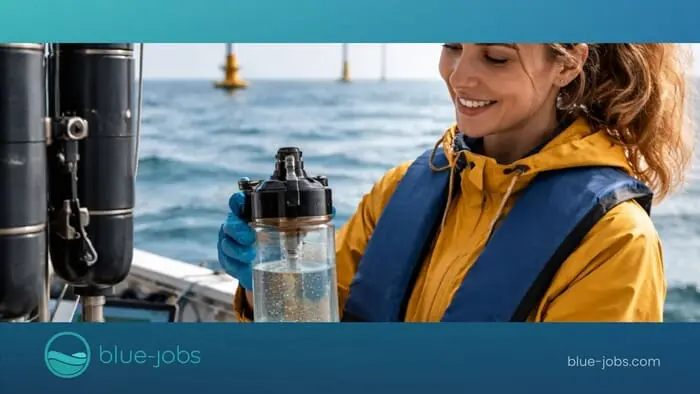
International Women’s Day and International Day of Women and Girls in Science often triggers a familiar conversation: how do we get more women into blue economy careers? In 2026, the sharper question is different: how do we make sure they can stay? Because the blue economy’s retention problem isn’t just a pipeline issue. It’s a job-design issue.
When work is structured around long rotations, irregular shifts, remote sites, seasonal peaks, and a culture of total availability, it quietly filters out people with caregiving responsibilities. And across Europe, those responsibilities still fall disproportionately on women—especially in the years when careers should be accelerating.
This is exactly why work–life policies are not “nice-to-haves”. They are the operating system for talent retention.
The structural reality: women are concentrated where the job is compatible with life
The data we do have for the EU is revealing—and also exposes a bigger problem: gender-disaggregated data is still limited across blue economy sectors.
According to the EU Blue Economy Observatory, the only sector with comparable EU-wide gender breakdown data is “marine living resources.” Within it:
- Women represented 3.63% of the workforce on board fishing vessels (2020)
- 22% of employees in aquaculture (2020)
- 56.2% of employees in the fish processing industry (2021)
That’s not a subtle pattern. Women are far more present in roles that are land-based and predictable (processing), less present in roles that can require travel, overnight stays, or prolonged time away (on-board fishing). This is a retention signal, not just a recruitment signal.
And the problem is broader than the available statistics suggest. The EU Blue Economy reporting itself notes that gender-specific employment data is only available for a limited subset of sectors—meaning large parts of maritime transport, ports, offshore energy, coastal tourism, marine tech, and seabed activities are still comparatively “data-dark” from a gender perspective.
If institutions can’t measure where women drop out, it becomes harder to fix. But we already know enough to name the core mechanism: work design + caregiving load.
Blue economy work amplifies the “care penalty”
Many blue economy roles have characteristics that make retention harder when care responsibilities enter the picture:
- Shift work and unpredictable schedules (ports, logistics, some vessel operations)
- Rotations and time away (offshore, shipping, fishing)
- Remote locations (offshore wind farms, coastal sites, marine research stations)
- Seasonality and peak demand (tourism, fisheries)
- Safety and inclusion gaps in traditionally male workplaces (facilities, PPE fit, harassment reporting, culture)
This is not about individual resilience. It’s about system design.
And because women still provide a larger share of unpaid care work, those constraints translate into a higher probability of exit—particularly around parenthood and eldercare. The macro picture matches this: in 2024 the EU employment rate was 80.8% for men vs 70.8% for women, a 10 percentage-point gap.
Retention in the blue economy sits inside that structural gap.
EU law is already pushing the system: two directives that change retention economics
The good news is that the EU framework has moved beyond generic equality principles into concrete, enforceable minimum rights that directly target retention.
1) The Work–Life Balance Directive (EU) 2019/1158: retention infrastructure, not a benefit
Directive (EU) 2019/1158 sets minimum requirements around:
- Paternity leave: at least 10 working days around the birth of a child
- Parental leave: 4 months per parent, with 2 months non-transferable
- Carers’ leave: at least 5 working days per year
- Right to request flexible working arrangements for parents and carers
What makes this directive strategically important for retention is its design logic: it is not “women’s policy.” It’s built to rebalance care between genders by giving individual rights to fathers/second parents and carers.
That matters because women’s careers are often penalised not simply because they take leave, but because employers expect women to be the ones who will. When men take parental and carers’ leave at meaningful rates, the bias starts to weaken.
In blue economy contexts—where availability and continuity are prized—this directive nudges employers toward more resilient staffing models: cross-training, predictable rotations, backfill planning, and outcome-based performance metrics.
2) The Recast Directive 2006/54/EC: the equality “floor” that protects careers
Directive 2006/54/EC consolidates and strengthens the principle of equal opportunities and equal treatment in employment and occupation—covering access to employment, vocational training, working conditions, and pay.
For retention, this matters because many “leaky pipeline” moments are also legal risk moments: slower promotion after maternity, exclusion from training due to caregiving schedules, biased performance evaluation during flexible work arrangements, or pay progression stalls after leave.
This directive sets the baseline expectation: policies and practices must not create discriminatory outcomes, including indirect discrimination that can arise when “neutral” rules disproportionately disadvantage women.
Why this matters now for the blue economy
Retention is becoming urgent for three reasons:
- Workforce pressure: the blue economy is scaling in areas like offshore wind, port modernisation, maritime logistics, and marine innovation. Growth collides with skill shortages.
- Automation changes roles, not care needs: even as technology evolves, caregiving constraints don’t disappear.
- Women’s participation in maritime remains uneven globally: the IMO–WISTA Women in Maritime Survey reports “inconsistent improvements” in female participation across the sector, underscoring that progress isn’t automatic.
If retention is treated as a side issue, the sector keeps paying the same costs: repeated recruitment, stalled leadership pipelines, reduced diversity in decision-making, and a loss of expertise precisely when it’s most needed.
What institutions should do: make retention measurable and fundable
1) Fix the data gap.
Require gender-disaggregated reporting across blue economy subsectors—not just marine living resources. If gender data exists only in one pocket of the economy, policy will remain reactive and incomplete.
2) Tie public funding to retention outcomes.
EU and national funding streams can require applicants to define measurable retention actions: uptake of carers’ leave by men, return-to-work rates, promotion rates post-leave, and workplace safety/inclusion indicators.
3) Build “returnship” pathways into the ecosystem.
Structured re-entry programmes after caregiving breaks—particularly for technical roles—protect hard-won skills and keep women in the leadership pipeline.
4) Standardise minimum safety and dignity conditions in maritime workplaces.
Facilities, PPE, accommodation standards, and robust reporting mechanisms aren’t optional in retention terms. They are risk controls.
What employers should do: practical retention design for blue economy realities
This is where the article becomes operational. The aim isn’t to copy-paste corporate policies into offshore or port settings. It’s to adapt the principles of work–life balance to the realities of blue jobs.
A) Organisational reforms
- Revising hiring and promotion practices to ensure neutrality
- Revising workplace safety, especially at sea
- Addressing biases and harassment
- Robust and confidential reporting systems
- Gender specific training
- Inclusive and family supportive frameworks
B) Make flexibility real (and compatible with operations)
- Predictable rosters published earlier, with limits on last-minute changes
- Rotation redesign: shorter rotations where feasible, or structured “on/off” patterns that families can plan around
- Shift-swapping systems with transparency and guardrails
- Job-sharing for roles that can be split without compromising safety (e.g., some planning, compliance, support engineering functions)
- Hybrid options for land-based technical roles (where security and safety allow)
C) Make leave usable (especially for men)
The Work–Life Balance Directive only improves retention if people feel safe using it.
- Normalise paternity and parental leave uptake through leadership behaviour and explicit planning
- Treat leave as a staffing design variable, not an inconvenience
- Train managers to evaluate performance by outputs and safety compliance, not “presence”
D) Protect career progression during caregiving phases
Retention fails when flexible work becomes a career dead-end.
- Define promotion criteria that don’t penalise periods of leave
- Ensure access to training regardless of schedule constraints
- Audit pay progression and role assignment after return from leave
D) Build a workplace that women don’t have to “endure”
Retention collapses when the workplace is hostile or unsafe.
- Clear anti-harassment policies with trusted reporting channels
- Facilities and equipment that fit everyone (including PPE)
- Mentoring + sponsorship programmes that support progression into supervisory roles (where attrition often spikes)
The KPI set that actually proves retention (and signals compliance maturity)
If you can’t measure it, you can’t manage it. A retention-focused dashboard should include:
- Retention rate at 12/24 months by role, site, and subsector
- Parental leave uptake by men (as a leading indicator of bias reduction)
- Return-to-work rate after parental/care leave
- Promotion rate post-leave (vs baseline)
- Pay progression after leave
- Safety and inclusion indicators (reported incidents + resolution time)
These KPIs turn “commitment to equality” into something operational—and help organisations align with the intent of EU directives, not just the letter.
Closing: retention is the competitive advantage
Retaining women in the blue economy is not a communications campaign. It’s not a mentorship-only initiative. It’s work design, backed by law, supported by data, and delivered through daily management.
The EU is already setting the direction through the Work–Life Balance Directive and the equal treatment framework. The next step is execution: institutions making gender data visible across the blue economy, and employers modernising staffing models so that skilled professionals don’t have to choose between a blue career and a life.
Because the future of the blue economy depends not only on how many people we attract—but on who can afford to stay.
Sources
● https://eur-lex.europa.eu/eli/dir/2019/1158/oj/eng
● https://eur-lex.europa.eu/legal-content/EN/TXT/PDF/?uri=CELEX%3A32019L1158
● https://eur-lex.europa.eu/eli/dir/2006/54/oj/eng
● https://eur-lex.europa.eu/EN/legal-content/summary/work-life-balance-for-parents-and-carers.html
● https://www.consilium.europa.eu/en/policies/work-life-balance/
● https://blue-economy-observatory.ec.europa.eu/women-blue-economy_en
● https://publications.jrc.ec.europa.eu/repository/bitstream/JRC142453/JRC142453_01.pdf
● https://ec.europa.eu/eurostat/statistics-explained/index.php/Employment_-_annual_statistics
● https://winbigproject.eu/assets/content/publications/D2.4_WIN-BIG_EMFAF_Policy_Brief.pdf
