Should You Recruit Internationally in the Blue Economy?
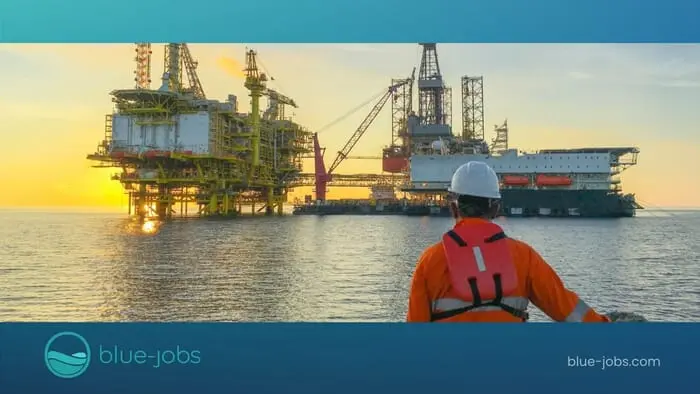
The sea has never been local
For an industry built on routes, ports, coastlines and offshore infrastructures, the blue economy still hires with a surprisingly narrow map in mind. Many companies continue to recruit as if talent should come from the nearest city, the nearest region, or at most the nearest country. But the reality of the sector says otherwise.
The sea does not operate within neat national boundaries. Shipping lanes connect continents. Marine science depends on international collaboration. Offshore energy projects bring together engineers, technicians and specialists from different markets. Fisheries, aquaculture, marine conservation and maritime logistics all move within an environment that is, by nature, transnational. It is difficult to defend a local-only hiring mindset in a sector that has never been truly local.
That mismatch is becoming more visible as the blue economy grows. The European Commission’s blue careers initiative has been highlighting the need to strengthen skills across maritime sectors for some time, while the OECD’s work on the ocean economy points to the long-term growth potential of ocean-based industries. Growth, however, has a practical consequence: more activity requires more people, and not always the kind of people a local market can readily provide.
The talent shortage is no longer a side issue
In many blue economy niches, hiring difficulties are no longer anecdotal. They are structural. Companies are struggling to find technical profiles, digital specialists, engineers, sustainability professionals and workers with enough sector-specific understanding to move quickly in complex roles. This is especially visible in areas linked to offshore renewables, maritime technology, environmental compliance, port operations and marine data.
That shortage is not only about the number of candidates. It is also about fit. A company may receive applications, but not from people with the right certifications, the right operational mindset, the right language skills, or the right experience in international environments. When this happens, businesses can spend months trapped in long selection processes that create fatigue internally and delay growth externally.
The risk of living inside a local talent bubble
Hiring locally feels safe. It reduces the perceived friction of recruitment. Shared language, familiar regulation and fewer relocation headaches all make the process seem more manageable. But convenience has a price.
When every employer in a region competes for the same limited profiles, a kind of local talent bubble appears. Salaries rise, time-to-hire stretches, and the available pool becomes increasingly overfished. The metaphor is almost too obvious: too many boats chasing too few resources.
There is another problem, less visible but equally important. Local-only recruitment can make organisations intellectually narrower. The same training systems, the same professional habits and the same market assumptions tend to reproduce themselves. In sectors under pressure to innovate, adapt and internationalise, that can be costly. International talent does not only fill gaps. It often introduces different technical approaches, broader experience and a more agile understanding of how the sector operates beyond one labour market.
A global sector needs a broader hiring horizon
There is a deeper reason why international recruitment makes sense in the blue economy: the sector itself is global in structure. Maritime transport is global. Ocean research is global. Environmental regulation is increasingly shaped by international frameworks. Supply chains are global. Even the risks faced by the sector, from climate pressures to geopolitical instability, are global.
Recruiting internationally is therefore not a break from the logic of the industry. It is an extension of it.
This does not mean every company should immediately build a multinational workforce for every role. It means employers should stop treating national borders as the natural limit of their talent search. In many cases, the profile that is hardest to find locally may be much easier to find elsewhere. A marine engineer, a naval architect, a specialist in offshore inspection, a blue tech data analyst or a sustainability manager with maritime expertise may not be available in your immediate environment, but that does not mean they do not exist. It may simply mean you are looking through too small a window.
Remote work has changed the conversation
The rise of remote and hybrid work has complicated, and improved, this picture. Not every role in the blue economy can be done remotely, of course. Vessel operations, on-site inspections, port activity, marine maintenance and many technical interventions require physical presence. But a growing number of functions can now be carried out from another city or another country without sacrificing performance.
Compliance, project coordination, GIS analysis, reporting, digital operations, commercial support, environmental assessment and parts of engineering or planning can often be structured in more flexible ways than many traditional maritime employers assume. Research from the World Economic Forum’s Future of Jobs Report and the OECD’s work on teleworking has helped normalise the idea that talent no longer needs to sit in the same office to create value.
That matters because remote work changes the cost-benefit equation of international recruitment. It allows companies to access specialised talent without always requiring full relocation. It also creates intermediate models: remote-first roles, hybrid regional structures, project-based collaborations, and international teams assembled around expertise rather than geography.
The case for international talent is not only numerical
One of the most simplistic arguments in favour of international hiring is that it expands the candidate pool. That is true, but insufficient. The stronger argument is qualitative.
International recruitment can improve the calibre of thinking inside a company. People who have worked across countries or in multinational settings often bring sharper adaptability, stronger intercultural communication and a more realistic understanding of how business works beyond domestic assumptions.
There is also a resilience argument. Companies that recruit internationally are often better prepared for volatility. They are less dependent on one labour market, less constrained by regional bottlenecks, and more capable of building teams that reflect the complexity of the environments in which they operate.
However, recruiting internationally adds layers of complexity, and those layers need to be managed deliberately.
● Visa systems, work permits and legal frameworks must be understood in advance. The EU Immigration Portal is a useful starting point.
● Language must be treated as an operational factor, not a secondary detail.
● Cultural integration is essential for retention, as highlighted in OECD guidance.
● Relocation support and mobility logistics also play a critical role, as reflected in the work of the International Organization for Migration.
● And ethical recruitment practices remain key, particularly in global labour markets, as outlined by the ILO.
So should you recruit internationally in the blue economy?
In many cases, yes. The talent gap is real. The sector is global. And the competition is already expanding beyond borders. This does not mean abandoning local talent. It means complementing it with a broader, more strategic approach. The blue economy reminds us that economic activity does not stop at borders. The sea connects. Talent increasingly does too.
If your company is hiring in the blue economy and the local market is not delivering the profiles you need, it may be time to rethink your approach. Discover how to connect with international talent in maritime and ocean-related sectors: https://www.blue-jobs.com
